The call ends. You're back at your desk. You meant to write down that she mentioned her son's graduation. You meant to follow up about the job she was waiting to hear about. Two weeks later, you ask again — and she tells you the news came out three days after you spoke. You had no idea.
This is a tiny failure with a cumulative cost. Repeated hundreds of times across dozens of relationships, it erodes the feeling that you are truly known and truly listening.
Whokin's call detection
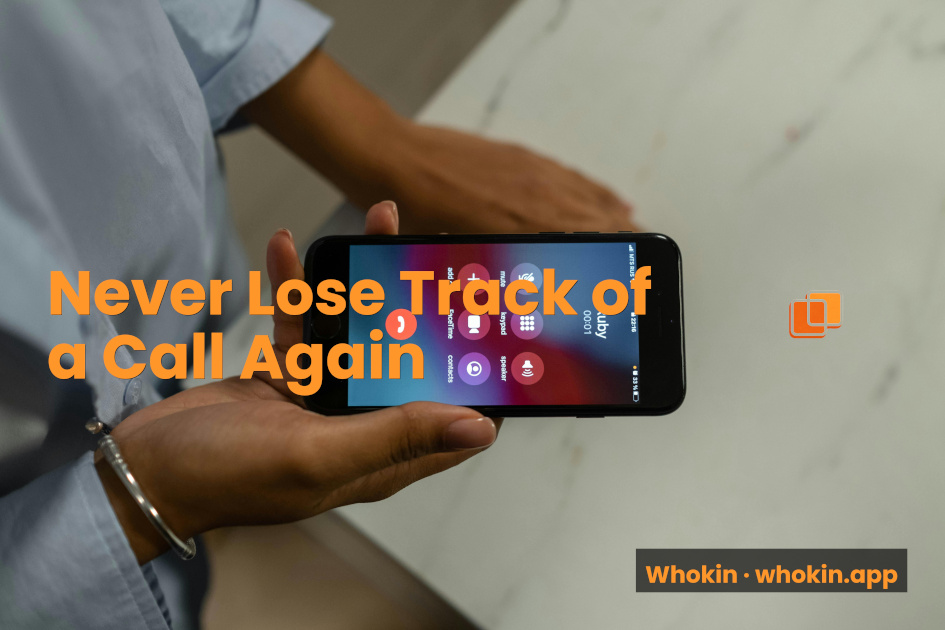
When your phone call ends, Whokin sends a quiet prompt: "You just had a call — who was it with?" You tap it, pick the kin, and add a note if you like. Done in under 20 seconds. The interaction is logged, encrypted, and waiting for you the next time you look up that person.
Whokin never reads your call history. It only detects that a call happened (via Android's phone-state permission) and asks you to log it voluntarily. Your privacy stays intact.
Why this approach is better than reading call logs
Some apps try to automatically match call logs to contacts. This requires deep access to your call history and raises real privacy concerns. Whokin takes a different approach: it simply notices that a call occurred and asks you one question. You stay in control of what gets logged.
The compound effect
A one-line note after each call sounds trivial. Over six months, it becomes a rich history of your relationship — the things that mattered to them, the things you promised to follow up on, the context for every future conversation. The difference between a good friend and a great friend is often just this: the great friend remembers.
Available on Android
Call detection requires the Phone permission on Android. iOS does not allow third-party apps to monitor call state — on iPhone, you can log calls manually through the app in under a minute.