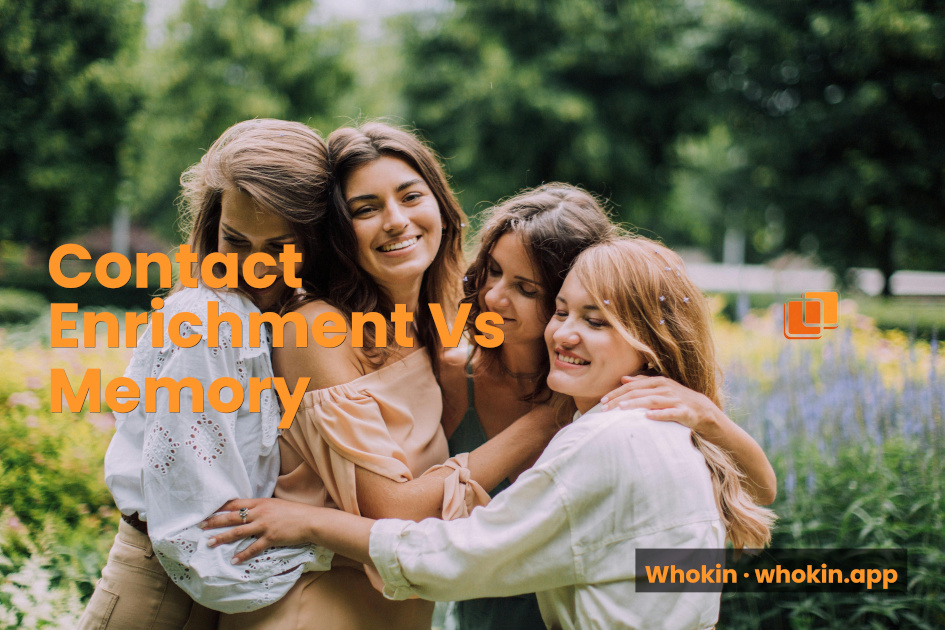
There is a category of apps that "enrich" your contacts — they scrape LinkedIn, social media, and public databases to append employment history, profile photos, and other publicly available information to the people in your address book. The pitch is that you'll always know who you're talking to.
There is a fundamental problem with this approach: the information gathered is not from the person. They didn't share it with you. You extracted it from systems they were participating in for entirely different reasons.
The difference between enrichment and memory
Whokin doesn't enrich contacts. Whokin helps you remember what people actually told you. The notes in Whokin are what your friend chose to share — their health situation, their career news, what they're worried about, what they're proud of. This information is intimate precisely because it came from them, to you, in a context of trust.
The most meaningful thing you can know about someone is what they chose to tell you — not what an algorithm scraped from the internet.
Why this distinction matters
Enrichment data makes you look informed. Memory of what someone actually shared with you makes them feel cared for. These are different outcomes with different mechanisms. One is about projection of competence. The other is about genuine human connection.
The privacy dimension
Contact enrichment apps typically run your contacts through external databases — which means your contacts' information, gathered without their knowledge, is flowing through a third-party service. Whokin is the opposite: all data stays on your device, all notes come from the person you're caring about, and nothing flows anywhere without your explicit action.